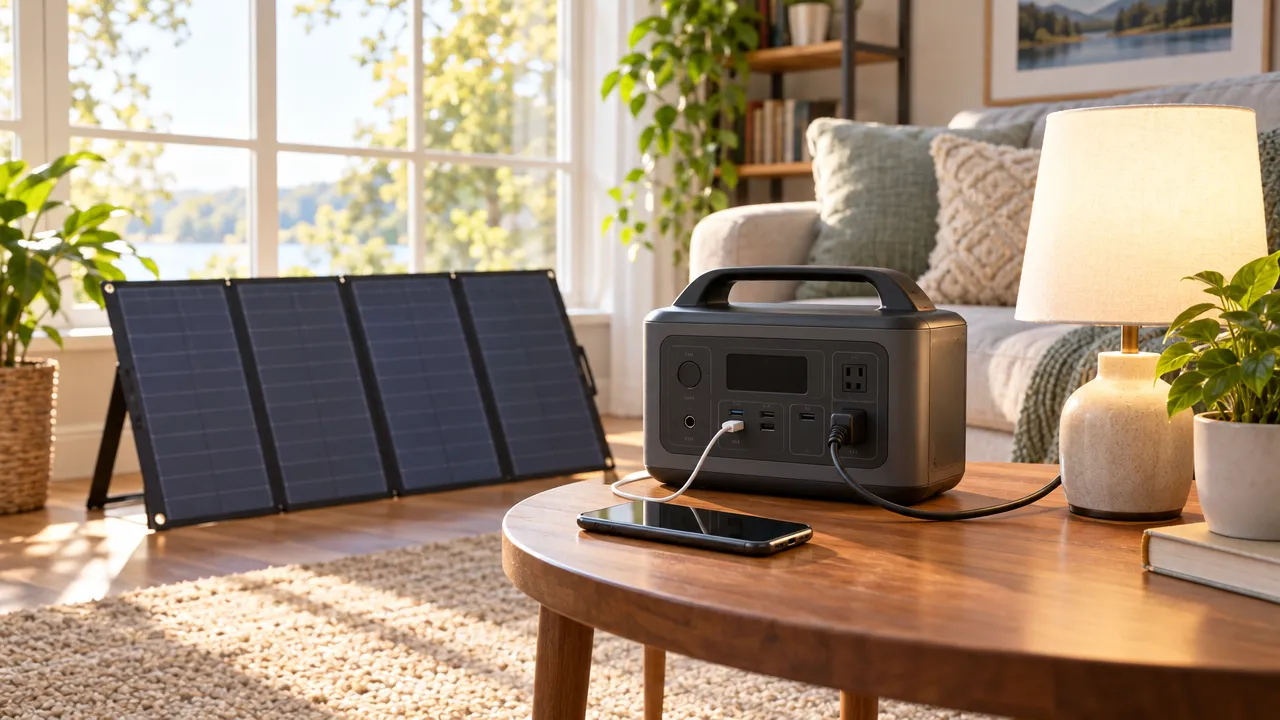
Portable power station charging a phone beside a solar panel

Shop Power

Backup Power Supply

Portable power stations, solar generators and long-life batteries to keep phones, lights and small devices running when the grid goes down.

6 picks

As an Amazon Associate I earn from qualifying purchases. Buttons go to Amazon, where you can check current prices and reviews.

Jackery Explorer 300 power station

292Wh capacity, 7.5 lbs, recharges from the wall, car or solar

Why it's here: Our top pick for most homes. Light enough to carry room to room, and enough power for phones, lamps, a laptop and a fan through a typical outage.

Check price on Amazon

Jackery Solar Generator 300 with 40W panel

Explorer 300 plus a foldable solar panel

Why it's here: The same trusted station, bundled with a panel so you can recharge during a multi-day outage when the grid stays down.

Check price on Amazon

LIBRIDS C600 power station

640Wh, 600W output, 4 AC outlets, 8 ports total

Why it's here: Roughly double the capacity of the 300-size stations. A good step up if you want to run more devices or go longer between charges.

Check price on Amazon

300W power station with 60W solar panel

Budget bundle, panel included

Why it's here: The lowest-cost way to get a power station and solar panel together. Best for charging phones, lights and small electronics.

Check price on Amazon

Jackery HomePower 3600 Plus

3,584Wh, 3,600W output, expandable

Why it's here: Whole-home territory. Strong enough for a fridge, sump pump or well pump, which smaller stations can't handle. A big investment for homes that lose power often.

Check price on Amazon

Duracell Coppertop AA and AAA, 56 count

12-year storage guarantee

Why it's here: Lanterns, flashlights, radios and remotes all run on these. One mixed pack covers most of the house, and they keep for over a decade in a drawer.

Check price on Amazon
Power stations vs. gas generators

A portable power station is a big rechargeable battery with outlets. It’s silent, has no fumes, and is safe to use indoors. A gas generator produces more power for longer, but it must run outside, at least 20 feet from doors and windows, because of carbon monoxide.

For most households, a power station is the easier, safer starting point.

How to read the numbers

  • Wh (watt-hours) is the size of the tank. More Wh means it runs things longer.
  • W (watts) is how much it can power at once. Check that it covers your hungriest device.

A rough guide: a 300Wh station will recharge a phone many times over, or run a 10W LED lamp for around a day. Check the wattage label on anything you plan to plug in, especially medical devices like a CPAP.

Which size do you need?

  • Phones, lights, radio, Wi-Fi router: 250 to 500Wh
  • Add a laptop, fan or CPAP for a night or two: 500 to 1,000Wh
  • Fridge, sump pump, well pump: 2,000Wh and up, with high output

Keep it ready

Charge your station fully, then top it up every 3 months. Store batteries in a cool, dry place, and test everything once a season so you’re not discovering a dead battery during a storm.

Guides and checklists

Get the free winter storm checklist

A one-page printable that covers your home, car and supplies. Stick it on the fridge and check things off.

Open the printable